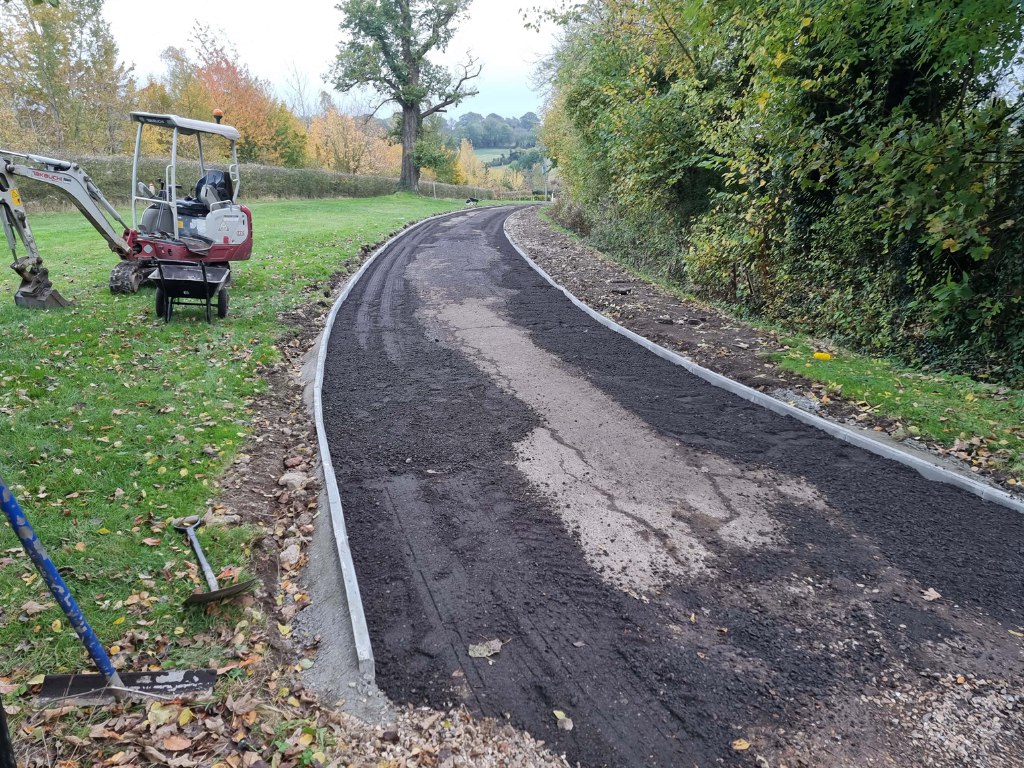
What Makes Tarmac a Practical Surface for Commercial Car Parks and Roadways?
Commercial car parks and roadways must withstand regular vehicle movements while providing a stable, orderly and professional-looking surface. Tarmac is widely suited to these environments because it creates a smooth, durable finish capable of supporting frequent traffic when installed over a correctly prepared foundation.
For commercial properties in Tunbridge Wells, Kent, the long-term performance of tarmac depends on more than the surface material alone. Careful preparation, suitable drainage and professional compaction are all essential to creating an area that remains practical under daily use.
Why Tarmac Works Well for Commercial Vehicle Areas
Tarmac combines strength, flexibility and straightforward maintenance. These qualities make it suitable for access roads, parking areas, turning spaces and other surfaces used by staff, customers, visitors and delivery vehicles.
A Smooth Surface for Regular Traffic
A professionally laid tarmac surface provides a consistent running course without the loose material associated with some alternative finishes. This helps vehicles move smoothly through parking and access areas while reducing unnecessary vibration and surface noise.
A level finish can also make entrances, parking bays and pedestrian routes easier to define. Where a commercial site experiences frequent vehicle movements, this consistency contributes to a more organised and usable environment.
Strength Begins Below the Surface
The stability of a tarmac car park or roadway depends heavily on its sub-base. Laying tarmac over weak, uneven or poorly compacted ground can lead to depressions, cracking and movement under traffic.
Professional ground preparation usually involves:
- Excavating to the appropriate depth
- Removing unsuitable or unstable material
- Installing and compacting a suitable sub-base
- Creating the necessary levels and falls
- Strengthening edges and vulnerable sections
- Preparing the surface to receive the tarmac layers
The required construction should reflect anticipated vehicle use. A roadway serving heavier or more frequent traffic may need a different specification from a lightly used parking area.
Tarmac Can Accommodate Everyday Movement
Tarmac has a degree of flexibility, allowing it to cope with normal movement caused by traffic and changing ground temperatures. This does not make it immune to damage, but it can help the surface perform reliably without behaving like a completely rigid material.
Correct installation remains essential. The tarmac must be laid at an appropriate thickness and compacted evenly before cooling. Poor joints, insufficient compaction or thin areas can become early points of weakness.
Effective Drainage Protects the Surface
Standing water is a common threat to commercial surfacing. Water can enter small cracks, weaken supporting layers and contribute to potholes or localised settlement.
A well-designed tarmac area should guide rainwater away through carefully formed gradients and suitable drainage points. Particular attention should be given to entrances, low spots, kerb lines and areas where vehicles frequently turn or stop.
Drainage should therefore be considered during the initial design rather than treated as an addition after the surface has been laid.
Clear Layouts Can Be Created
Commercial car parks need more than a hard surface. They also require a layout that makes practical use of the available space.
Tarmac provides a uniform background for clearly marking:
- Parking bays
- Traffic directions
- Pedestrian routes
- Loading areas
- Entrances and exits
- Restricted or designated zones
A logical arrangement can improve traffic flow and make the site easier for visitors to understand. The design should consider vehicle size, turning requirements and the way pedestrians move between parked vehicles and buildings.
Proper Edging Reduces Surface Movement
The edges of a car park or roadway can become vulnerable when they are not adequately supported. Repeated vehicle loading near an exposed edge may cause cracking, crumbling or spreading.
Kerbs, channels or other suitable restraints help contain the tarmac and protect its perimeter. They can also assist with drainage and create a defined boundary between the surfaced area and adjoining landscaping or pathways.
Repairs Can Be Confined to Damaged Areas
Even a well-built commercial surface may eventually experience wear in areas exposed to concentrated loading, repeated turning or heavy braking. One practical advantage of tarmac is that localised defects can often be repaired without renewing the entire area.
Cracks, depressions and potholes should be investigated promptly. A visible defect may indicate movement or water penetration beneath the surface, so simply filling the damaged area without addressing its cause may produce only a temporary improvement.
Routine Maintenance Supports a Longer Service Life
Commercial tarmac should be inspected periodically, particularly around drainage channels, joints, turning points and entrances. Early attention to developing defects helps prevent water and traffic from making them more extensive.
Useful maintenance measures include keeping drainage points clear, removing debris, monitoring cracks and repairing isolated surface damage before adjoining material begins to deteriorate. Any areas affected by fuel or other contaminants should also be assessed, as these substances can weaken the binder within the tarmac.
Professional Installation Makes the Difference
Tarmac is practical only when the construction is suited to the site. Vehicle types, traffic frequency, ground conditions, drainage and intended layout should all influence how the area is prepared and surfaced.
A professional assessment can identify weak ground, poor falls and sections likely to experience concentrated loading. This allows the specification to be planned around how the car park or roadway will actually be used.
Conclusion
Tarmac is a practical surface for commercial car parks and roadways because it provides a smooth finish, supports regular vehicle traffic and allows clear, functional layouts to be created. Its performance relies on a stable sub-base, effective drainage, strong edging and thorough compaction.
Tunbridge Wells Driveways installs commercial tarmac surfaces in Tunbridge Wells, Kent. If you are planning a new car park or roadway, or an existing surface is beginning to deteriorate, contact our team to arrange an assessment and discuss the most appropriate solution for your site.
Call us on: 01892 578 896
Click here to find out more about Tunbridge Wells Driveways
Click here to complete our contact form and see how we can help with your Driveway needs.